The short answer
Removing sofa feet and unbolting frame brackets resolves 80% of narrow door blocks
Dismantling modular sectionals and recliners before moving is the safest way to prevent damage to door frames and upholstery. Success requires identifying frame connection points, removing the feet, unbolting brackets, and keeping all fixing hardware organized.
- Leg removal: Unscrewing wooden legs yields an extra 10-15cm of clearance.
- Modular brackets: Lift modular pieces vertically to slide them off locking slide brackets.
- Armrest removal: Look for internal hex-head bolts underneath the bottom lining fabric.
- Access override: If solid frames cannot be split, a balcony hoist is the best alternative.
How to Remove Sofa Armrests & Sides
Fixed-back 3-seater sofas are solid structures, but many modern designs (including Chesterfield and scatter-back couches) have removable arms. To access the frame bolts, flip the sofa onto its back and peel away the dust cover fabric (usually secured with Velcro or staples).
Locate the steel bolts that connect the armrest frame to the main seat box. Use a socket wrench or Allen key to loosen these. Removing both armrests reduces the width of the sofa frame by up to 30cm, allowing it to fit through tight Victorian hallways and doorways.
Dismantling Tools Needed
We recommend having these basic tools ready before you begin:
- Socket Wrench Set: Essential for heavy structural M10 and M12 bolts.
- Allen Keys: Metric hex-head keys for modular bracket fittings.
- Staple Remover & Stapler: To open and re-secure the bottom dust cover fabric.
- Hardware Bags: Plastic zipper bags to keep bolts, washers, and feet organized.
Unjoining L-Shaped & Corner Sectionals
Corner sectionals are too large to move as a single unit. They are designed to split into smaller sections (chaises, corner modules, and standard seats). These sections are connected by metal alligator or slide-in drop brackets.
To unjoin them, grab the corner section and lift it vertically. This slides the bracket pins out of their slots. Once separated, each module can be wrapped individually in protective blankets. This makes manual carrying through lifts and stairwells much safer.
Common Sectional Joint Designs
Understanding your sectional's bracket style makes separation much easier:
| Bracket Style | How to Separate | Reassembly Tip |
|---|---|---|
| Drop-in Slide Bracket | Lift one module straight up about 10cm | Align bracket pins from above and push down |
| Alligator Clip Joint | Push the modules sideways to release teeth | Push sections together until teeth lock |
Related reading: London Narrow Staircase Furniture Access Solutions and IKEA Sofa Delivery & Assembly London Guide.
Handling Solid, Non-Dismantlable Frames
If your sofa has a solid wood frame with non-removable arms and a fixed back, do not try to force it through tight spaces. Forcing it can warp the frame or tear the leather.
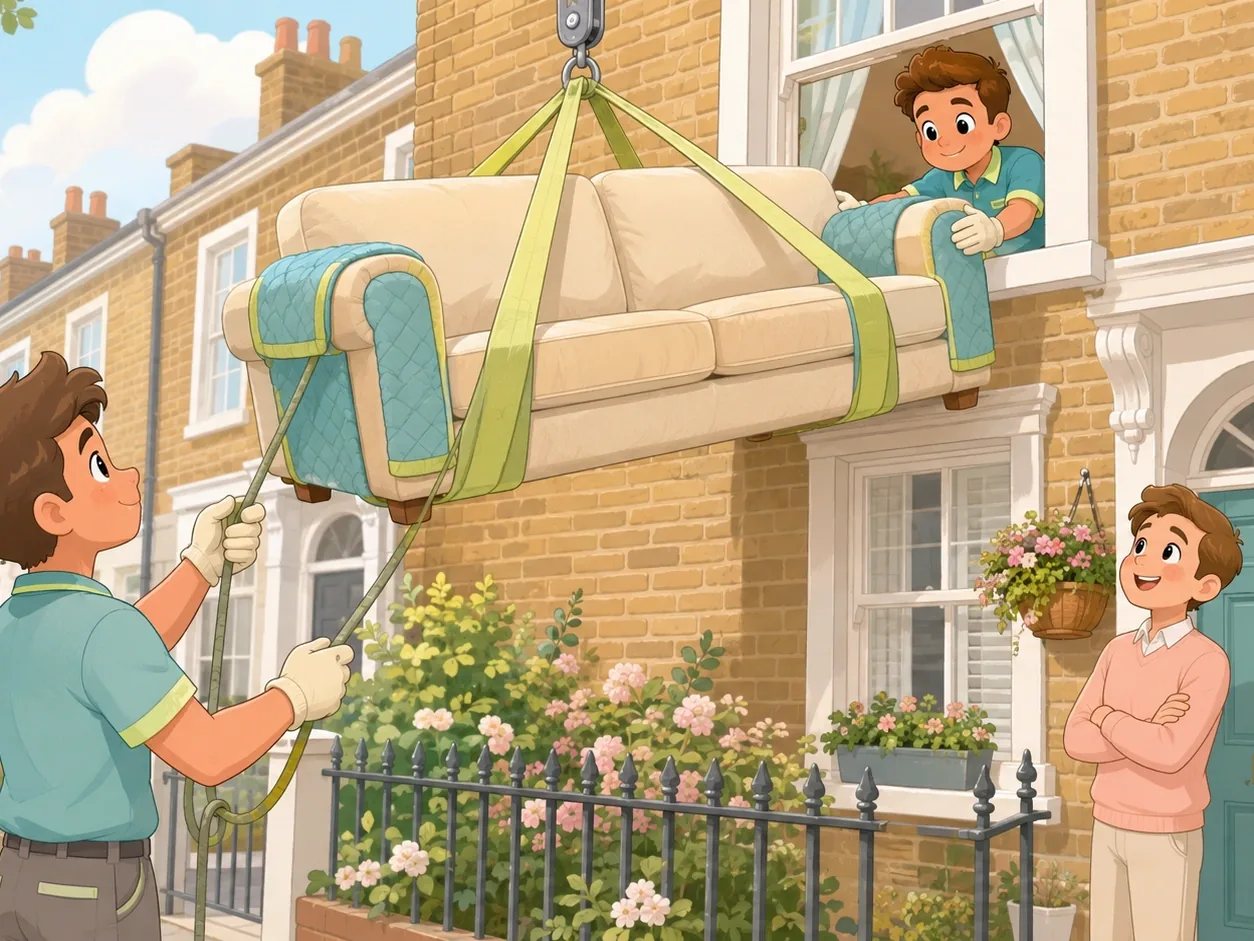
Instead of risking damage, consider our specialized Sofa Hoisting service. We can hoist solid-frame sofas through a window or balcony safely. If you need help with both transport and assembly, visit our main Sofa Delivery London page to explore pricing, van choices, and insurance cover.
Clear answers
Frequently asked questions
Usually not for simple dismantling. Removing screw-on feet or separating modular sections is normally designed into the sofa and should not affect the warranty. Taking apart the internal frame or removing stapled upholstery backing is different and can cause problems, so leave that to experienced professionals. If you are unsure, check the manufacturer's warranty terms or ask the retailer before anything is taken apart.
It depends on the sofa. A standard L-shaped corner sofa can usually be separated and put back together in about 20 to 30 minutes. A sofa bed mechanism, or a sofa where the arms have to be unbolted, typically takes 45 to 60 minutes. Send us photos of the sofa, including underneath and the joints, so we can estimate the time and bring the right tools for the job.