The short answer
Rigging security, load distribution, and guide ropes are vital
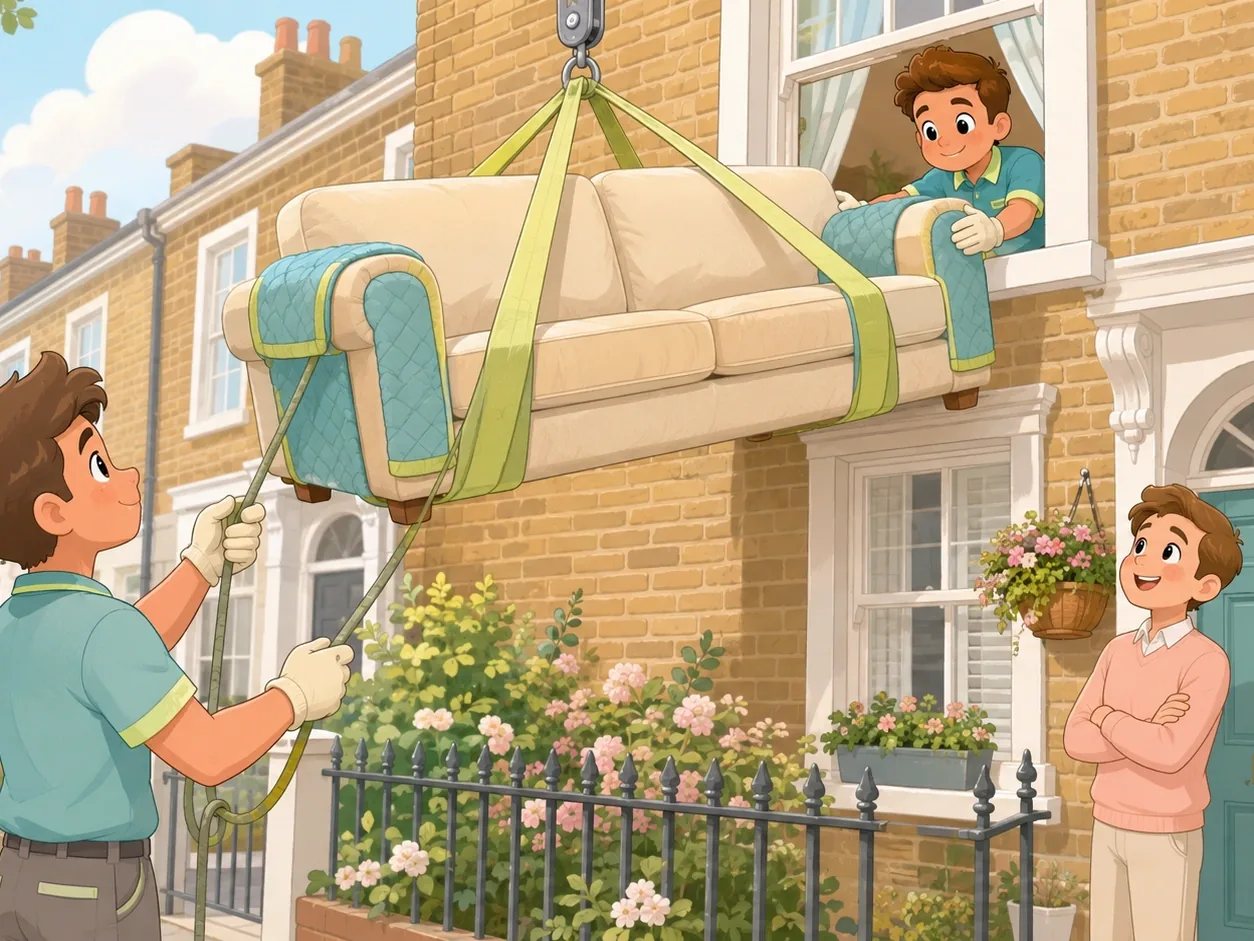
Exterior hoisting bypasses tight stairwells by lifting heavy furniture vertically through sash windows or balcony doors. Success requires load-rated polyester slings, heavy-duty padded frame protectors, dual guide lines, and experienced riggers coordinating the pull.
- Structural checks: Always verify balcony railings and sash window frames are load-bearing.
- Slings & Rigging: Use load-rated polyester webbing straps (minimum 1,000kg limit).
- Wall protection: Wrap sills in padded blankets to avoid brickwork friction scrapes.
- Wind control: Use ground guide ropes to prevent the furniture from spinning or hitting walls.
The Rigging and Equipment Setup
Successful vertical lifting relies on proper rigging. We never use cheap nylon cords or elastic ropes. Our crews use professional, heavy-duty, load-rated polyester webbing slings (minimum 1,000kg load limit). These slings are wide enough to distribute weight evenly across the sofa's bottom frame, avoiding local pressure marks or wood frame buckling.
The straps are secured using a balanced double-basket hitch. We run the webbing under the main support frame (not the outer cushions or decorative wood trim), ensuring the center of gravity sits directly below the lifting point. If the sofa is angled or has uneven weight distribution (such as a heavy sleeper mecanismo on one side), we adjust the strap links to keep the sofa completely flat during the lift.
Lifting Gear Checklist
A professional hoisting crew carries these essential tools for every lift:
- Polyester Webbing Slings: Two 6-meter straps with reinforced loop eyes for main cradle support.
- Sill Protectors & Pads: Padded slide boards that cover brick window frames, letting the sofa slide over without scratching.
- Guide Ropes: Two 15-meter static lines tied to the lower corners to control sway from the ground.
- Rigging Carabiners: High-tensile steel locking rings to secure strap intersections.
Balcony Lifts vs. Sash Window Entries
Navigating high floors in London typically involves two entry options: balcony double doors or sash windows. Balconies offer wider entryways but require a strong railing structure. We inspect balcony railings to confirm they are solid steel or reinforced concrete before setting up support brackets.
For sash windows, we regularly slide the wooden sash panels completely out of the frame. This provides a clean, wide opening. Padded slide boards are laid across the sill to protect both the window frame and the sofa fabric. The sofa is then guided horizontally through the window directly into the room.
Detailed Access Pivot Scenarios
If you're unsure which method fits your property, the table below compares the two main entry pathways:
| Access Type | Minimum Opening Needed | Setup Complexity | Primary Obstacles |
|---|---|---|---|
| Balcony Railing Lift | Sofa Depth + 10cm | Medium (verify railing strength) | Tree branches, low telephone lines |
| Sash Window Pivot | Sofa Height + 5cm | High (requires sash removal) | Narrow masonry frames, sill heights |
Related reading: Sofa Hoisting London: Safe Access, Costs & Planning Guide and London Narrow Staircase Furniture Access Solutions.
Damage Mitigation and Safety Protocols
Safety is the priority during vertical lifts. Our crew sets up a designated ground safety zone to keep pedestrians clear. Ground riggers manage the guide ropes to keep the sofa centered and prevent wind sway from pushing the item against the brickwork.
We wrap all corners of the sofa in double-layered bubble wrap and thick moving blankets, taped tightly. This prevents the fabric from snagging if it touches the window masonry. If access challenges arise on moving day, we recommend reading our dedicated Sofa Delivery London page to coordinate transport, or check our Sofa Hoisting service page for details on hoist hire rates, insurance cover, and specialist crew bookings.
Clear answers
Frequently asked questions
It depends where the equipment stands. If the sofa is lifted by hand from a private balcony, garden or driveway, a council permit is not usually needed. If a vehicle-mounted hoist or the lifting area takes up a public road, pavement or red route, permission such as a parking suspension is normally required. We can help coordinate this with the local council, but notice periods vary by borough, so start early.
Yes. We wrap leather sofas in a soft, non-abrasive inner layer first, then add thick transit blankets and heavy-duty stretch wrap on top. That way the lifting straps never touch the leather directly, which prevents scuffs, pressure marks and friction heat marks during the lift. Tell us if the leather is aniline or has a special finish, and point out any existing marks before the lift so they can be recorded.